Hair loss doesn’t always have the same cause, which is why one treatment doesn’t necessarily work for everyone. From gradually thinning hair and a widening part to sudden shedding or patchy bald spots, the underlying condition needs to be identified before choosing a regenerative treatment. Can Exosome Therapy Help Treat Different Types of Hair Loss? Current research suggests that exosome-based treatments may support hair follicle activity and improve hair density and thickness, particularly in non-scarring forms of hair loss. However, the evidence is still developing, and treatment should be selected according to the type and cause of hair loss.
What Is Exosome Therapy for Hair Loss?
Exosomes Therapy are tiny extracellular vesicles involved in communication between cells. They can carry biologically active molecules, including proteins, growth factors, and regulatory RNA, which may influence cellular activity.
In hair restoration research, exosomes are being studied for their ability to interact with the hair follicle environment, potentially supporting dermal papilla cells, follicular stem-cell activity, blood-vessel formation and pathways involved in the hair-growth cycle. Research has particularly explored pathways such as Wnt/β-catenin and other signals associated with follicular regeneration.
Unlike a hair transplant, exosome therapy doesn’t add new follicles. Instead, the concept is to create a more supportive environment for existing follicles that may still be functioning.
Which Types of Hair Loss May Respond to Exosome Therapy?
1. Androgenetic Alopecia or Pattern Hair Loss
This is currently the most studied type of hair loss in exosome research. It affects both men and women and typically causes gradual miniaturization of hair follicles.
Early clinical studies have reported improvements in measures such as hair density and shaft thickness after exosome-based treatment. A 2026 systematic review of research published through 2025 found encouraging early clinical results, but also noted small study populations, inconsistent protocols, and limited long-term evidence.
For someone with early or moderate pattern hair loss, exosome therapy may therefore be considered as one component of a broader hair-restoration plan rather than a guaranteed standalone solution.
2. Alopecia Areata
Alopecia areata is different because it involves an autoimmune attack on hair follicles. Exosomes are being investigated partly because some may have immunomodulatory and regenerative properties.
However, this is an area where patients should be particularly cautious about exaggerated claims. A 2025 systematic review identified only two clinical studies specifically involving alopecia areata, while much of the remaining evidence came from laboratory or animal research. Larger controlled human trials are still needed.
3. Telogen Effluvium
Telogen effluvium can cause noticeable shedding after triggers such as significant stress, illness, nutritional deficiencies, hormonal changes, or other physiological events.
Exosome therapy is sometimes discussed as a regenerative option for shedding, but the priority should be finding and addressing the trigger. A patient whose hair is falling because of iron deficiency, thyroid disease, medication, or another underlying issue shouldn’t rely on regenerative treatment alone.
The research base for exosomes in telogen effluvium is considerably less established than it is for pattern hair loss.
4. Chemotherapy-Associated Hair Loss
Emerging research has also investigated exosome-related approaches in chemotherapy-induced hair loss. However, this remains an early research area and shouldn’t be presented as an established treatment for patients undergoing cancer therapy.
5. Scarring Alopecia
This is an important distinction. In scarring alopecia, inflammation can permanently destroy hair follicles and replace them with scar tissue. Once a follicle has been permanently destroyed, simply stimulating the surrounding tissue cannot reliably recreate that follicle.
Therefore, suspected scarring alopecia requires appropriate dermatological diagnosis and treatment rather than assuming that exosome therapy will restore lost follicles.
How Is Exosome Therapy Performed?
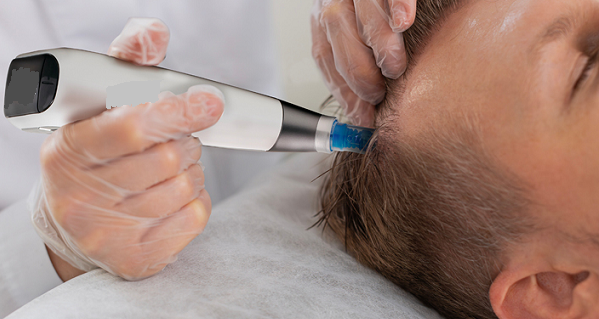
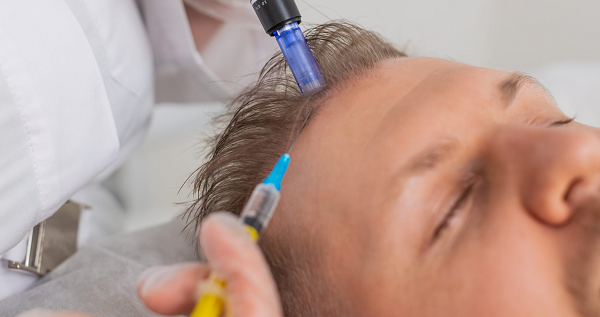
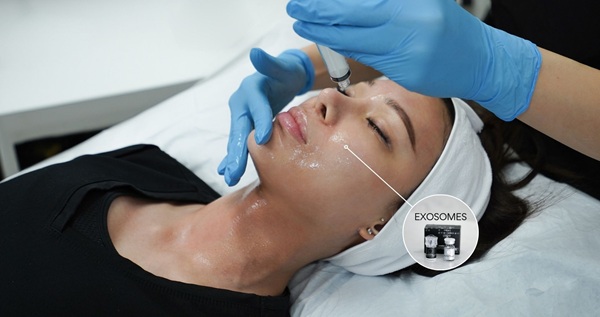
The exact procedure varies according to the product, formulation, and clinical protocol. Hair-focused approaches studied in research include topical application, microneedling-assisted delivery and intradermal administration.
A typical clinical assessment may involve:
- Hair and scalp evaluation to identify the pattern of hair loss.
- Medical history to identify possible triggers or underlying conditions.
- Scalp examination or trichoscopy when appropriate.
- Discussion of treatment options based on follicle condition and diagnosis.
- Exosome treatment using the selected delivery method.
- Follow-up assessment to monitor changes in shedding, density, and hair shaft quality.
At a consultation with Dr Fazeela Abbasi, the important question shouldn’t simply be whether exosomes are available. The more useful question is whether the patient’s particular type of hair loss has a reasonable biological and clinical basis for considering this treatment.
Potential Benefits of Exosome Therapy
Research suggests several potential benefits, although results aren’t guaranteed:
- May support hair follicle activity
- May improve hair density and shaft thickness
- May influence pathways involved in the hair-growth cycle
- May provide a non-surgical option for selected patients
- Can potentially be incorporated into a broader hair-restoration plan
- May be useful when existing follicles are still viable
Clinical studies published to date have reported improvements in at least one hair parameter in the majority of included studies, but researchers emphasize that protocols and study designs differ considerably.
Who May Be a Suitable Candidate?
Exosome therapy may be considered for people who have:
- Early or moderate pattern hair loss
- Visible thinning with viable follicles
- Certain non-scarring forms of alopecia
- Hair loss that has been properly assessed by a qualified professional
It may be less appropriate when follicles have been permanently destroyed, when an untreated underlying medical condition is causing the shedding, or when the diagnosis hasn’t been established.
Who Should Be Cautious?
People with unexplained rapid hair loss, active scalp disease, suspected scarring alopecia or significant underlying health issues should have a proper evaluation before considering regenerative procedures.
Another important consideration is the source and quality of the exosome product. Products can differ in biological source, preparation, characterization, and delivery. These differences make it difficult to compare one treatment directly with another.
Regulatory status also matters. The U.S. FDA has previously warned that there are no FDA-approved exosome products and has reported serious adverse events associated with unapproved products marketed as exosomes. Patients should therefore ask exactly what product is being used and what regulatory and quality-control standards apply in their location.
What Results Can You Expect?
It’s important to set realistic expectations. Exosome therapy isn’t a guaranteed cure for baldness, and results can vary according to:
- Type and severity of hair loss
- Age and condition of the follicles
- Underlying cause
- Treatment protocol
- Product characteristics
- Individual response
- Whether other treatments are used alongside it
Recent clinical reviews have reported improvements in hair density and thickness, but researchers continue to call for larger, better-designed trials and longer follow-up periods.
How Long Do Exosome Results Last?
There isn’t currently enough high-quality evidence to give one reliable duration that applies to everyone.
Hair follicles naturally move through growth and resting cycles, and the underlying cause of hair loss may continue after treatment. This means that even if a patient responds well, long-term maintenance may depend on the diagnosis and the overall treatment strategy.
How Much Does Exosome Therapy Cost?
The cost of Exosome Therapy in Islamabad can vary considerably. Factors may include the exosome source and formulation, treatment technique, number of sessions, scalp condition, and whether additional procedures or diagnostic assessments are recommended.
Rather than choosing a treatment solely because it is cheaper, patients should ask what product is being used, how it is prepared, who performs the procedure, and what follow-up is included.
Is Exosome Therapy Safe?
Early hair-loss studies have generally reported mild and temporary reactions such as redness, irritation, swelling, or itching. However, the overall evidence remains limited, and safety cannot be assumed for every exosome product or protocol.
That’s why Exosome Therapy for Hair Loss in Islamabad should be approached as a medical procedure rather than simply a cosmetic scalp treatment. Proper assessment, product quality, sterile technique, and appropriate patient selection all matter.
Common Mistakes Patients Make
Some of the most common mistakes include:
- Treating hair loss without identifying its cause
- Expecting immediate or dramatic regrowth
- Assuming all exosome products are identical
- Choosing a clinic based only on price
- Ignoring nutritional, hormonal or medical contributors
- Believing that regenerative therapy can recreate permanently destroyed follicles
- Comparing results from different studies without considering their different protocols
Frequently Asked Questions
How Does Exosome Therapy Work for Hair Loss?
Exosomes may influence cellular communication around hair follicles and deliver biologically active molecules that can affect pathways associated with follicular growth and regeneration. Much of the mechanistic evidence is still based on laboratory and preclinical research.
Can Exosomes Treat Every Type of Hair Loss?
No. Evidence varies substantially between conditions. Pattern hair loss has received the most clinical attention, while evidence for conditions such as alopecia areata and chemotherapy-induced hair loss remains much more limited. Scarring alopecia presents a separate challenge because permanently destroyed follicles cannot simply be regenerated by stimulating the surrounding tissue.
Is Exosome Therapy Better Than PRP?
There isn’t enough standardized evidence to declare one universally better than the other. They involve different biological approaches, and suitability depends on the patient’s diagnosis, treatment goals, and clinical assessment.
When Should I Expect Results?
Hair growth is naturally slow, so improvement shouldn’t be judged after only a few days or weeks. Clinical studies have used different follow-up periods, making it difficult to provide one universal timeline.
Is Exosome Therapy Worth Considering?
It may be worth discussing for carefully selected patients, particularly those with non-scarring hair loss and viable follicles. However, patients should weigh the emerging evidence, cost, product quality, and alternatives before making a decision.
Final Thoughts
Exosome therapy represents an interesting development in regenerative hair treatment, but it’s important to separate scientific potential from established clinical certainty. The strongest current interest is in non-scarring hair loss, especially androgenetic alopecia, where early studies have reported improvements in hair density and thickness. Research into alopecia areata and other forms of hair loss is growing, but the evidence remains less mature.
For anyone considering Exosome Therapy in Islamabad, the first step should be an accurate diagnosis rather than choosing a procedure based on marketing claims. A consultation with a qualified dermatologist such as Dr Fazeela Abbasi can help determine the likely cause of hair loss, assess whether the follicles are still viable, and discuss whether exosome therapy or another evidence-based option is appropriate.
The goal should always be informed treatment planning, realistic expectations and a strategy suited to the individual’s hair and scalp condition.