If you’ve noticed your hairline slowly moving backward, your crown becoming thinner, or more hair collecting on your pillow, you’re not alone. Male pattern hair loss, also called androgenetic alopecia, is extremely common, but that doesn’t make watching it progress any easier.
One treatment that often comes up during hair-loss consultations is platelet-rich plasma, or PRP. But PRP for male pattern hair loss: can it help, or is it simply another treatment promising more than it can deliver?
The honest answer is that PRP Therapy can help some men, particularly when treatment begins while follicles are still active. However, it is not a permanent cure for genetic hair loss. Research suggests PRP may improve hair density, although studies vary considerably in their preparation methods, treatment protocols, and reported outcomes.
What Is PRP for Male Pattern Hair Loss?
PRP, or platelet-rich plasma, is prepared from a small sample of your own blood.
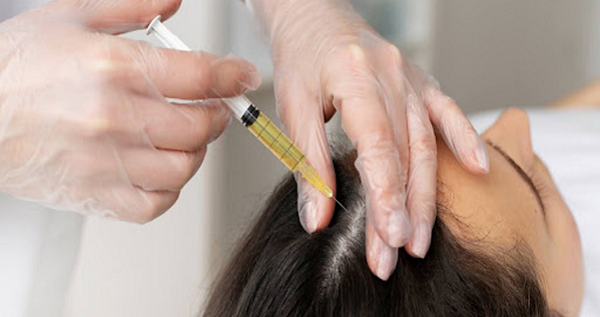
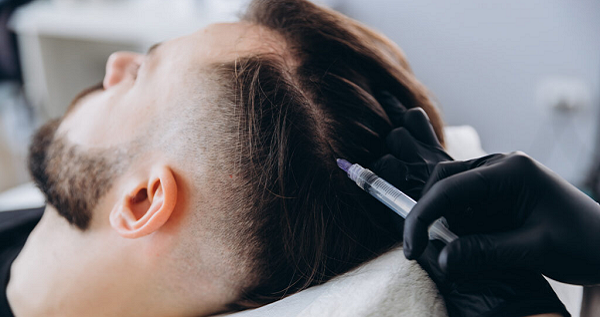
The blood is processed to concentrate platelets and their associated growth factors. The resulting plasma is then injected into areas of the scalp affected by thinning.
The goal isn’t to create completely new follicles. Instead, PRP is intended to support existing, weakened follicles and potentially improve their activity, hair density, and thickness.
That distinction matters. A man with miniaturized hairs around the crown may be a much better PRP candidate than someone with a completely smooth, long-standing bald area.
How Does PRP Work for Male Pattern Baldness?
The exact biological mechanisms are still being investigated, but platelet-rich plasma contains signaling proteins and growth factors involved in tissue repair and cellular activity.
Clinical research suggests that PRP may increase hair density in men with androgenetic alopecia. However, improvements in hair diameter and other measures have been less consistent across studies.
This means PRP is promising, but it shouldn’t be presented as a guaranteed hair-regrowth solution.
What Happens During a PRP Hair Treatment?
A typical PRP session involves several straightforward steps:
- Scalp assessment: A dermatologist evaluates the pattern and severity of hair loss and considers other possible causes of shedding.
- Blood collection: A small quantity of blood is taken, usually from the arm.
- PRP preparation: The sample is processed in a centrifuge to separate and concentrate the platelet-rich portion.
- Scalp injections: The prepared PRP is carefully injected into areas of thinning.
- Aftercare: You receive instructions about washing, exercise, medications, and scalp care.
A session commonly takes around 45–60 minutes, although the exact duration depends on the treatment protocol and the size of the treatment area.
At Dr. Fazeela Abbasi’s Islamabad practice, PRP is among the hair-loss treatments offered, with treatment plans tailored according to the patient’s condition rather than treating every case identically.
Who Is a Good Candidate for PRP?
PRP tends to make more sense when there are still viable follicles to stimulate.
You may be a reasonable candidate if you have:
- Early to moderate male pattern hair loss
- Thinning at the crown or frontal scalp
- Miniaturized hairs rather than completely bare skin
- Relatively recent progression of hair loss
- Realistic expectations about gradual improvement
Clinical recommendations have identified men with certain early-to-moderate Norwood-Hamilton stages as potential candidates and have generally recommended an initial series of treatments rather than relying on a single session.
Who May Not Benefit as Much?
PRP isn’t appropriate for every type or stage of hair loss.
You may need a different approach if:
- The scalp has extensive, longstanding baldness with few viable follicles.
- Hair loss is caused by scarring alopecia.
- You have an undiagnosed inflammatory or systemic condition causing shedding.
- You expect PRP to recreate a youthful hairline by itself.
- You’re unwilling to consider ongoing maintenance where appropriate.
This is why diagnosing the cause of hair loss should come before choosing a procedure.
What Results Should You Expect?
PRP results are gradual. Don’t judge the treatment after a couple of weeks.
Some patients notice reduced shedding or improved hair quality before seeing obvious changes in density. Meaningful assessment generally requires several months, and outcomes differ according to the stage of hair loss, follicle health, treatment protocol, and other therapies being used.
Clinical recommendations have commonly suggested an initial course of three to five sessions approximately one month apart, although individual treatment plans vary.
The most important expectation to set is this: PRP may improve the appearance and density of existing hair, but it doesn’t permanently eliminate the genetic tendency behind male pattern baldness.
PRP vs. Minoxidil: Which Is Better?
PRP shouldn’t automatically be considered superior to established medical treatments.
Recent research comparing PRP with topical minoxidil has not established a clear overall advantage for PRP across important outcomes such as hair density and terminal hair count. Some individual measures may favor PRP, but substantial differences between studies make direct comparisons difficult.
| Factor | PRP | Minoxidil |
| Treatment type | Injections | Topical medication |
| Uses patient’s own blood | Yes | No |
| Requires repeated sessions | Usually | Ongoing use |
| Evidence for AGA | Promising but variable | Established |
| Procedure required | Yes | No |
| Maintenance | Often needed | Usually ongoing |
For some men, combining approaches under dermatological supervision may make more sense than choosing one treatment in isolation.
Is PRP Safe?
Because PRP is derived from your own blood, allergic reactions to the plasma itself are less of a concern. However, PRP is still an injection procedure and isn’t completely risk-free.
Temporary effects can include:
- Tenderness or scalp soreness
- Redness
- Mild swelling
- Small bruises
- Temporary sensitivity at injection sites
Serious adverse reactions have been uncommon in clinical studies, but the overall evidence base remains limited by differences in treatment protocols and study quality.
A medically trained professional should also assess medications, bleeding risks, scalp conditions, and relevant medical history before treatment.
How Much Does PRP Cost in Islamabad?
If you’re researching PRP in Islamabad, clinic prices can vary considerably. Individual sessions may commonly fall within the PKR 10,000–25,000 range, while some clinics charge more for specialized protocols or combination treatments.
The total cost of a treatment plan depends on:
- Number of sessions
- Extent of hair loss
- PRP preparation technique
- Equipment and consumables
- Physician expertise
- Whether PRP is combined with another treatment
Rather than choosing the cheapest PRP hair treatment in Islamabad, ask what the quoted price actually includes and who will assess and perform the procedure.
Common PRP Mistakes Men Make
One of the biggest mistakes is starting treatment without confirming the diagnosis.
Other common problems include:
- Expecting dramatic regrowth after one session
- Choosing a provider based only on price
- Comparing before-and-after photographs without considering lighting and hair length
- Ignoring evidence-based medical treatments
- Continuing a treatment course despite seeing no meaningful improvement
- Assuming every PRP kit and preparation method is equivalent
PRP preparation is not standardized across studies, which is one reason published results can be difficult to compare directly.
Expert Advice: What Should You Do First?
If you’re noticing progressive male pattern hair loss, don’t start with the procedure start with the diagnosis.
A good consultation should establish:
- Whether the pattern actually fits androgenetic alopecia
- How advanced the hair loss is
- Whether follicles remain active in thinning areas
- Whether nutritional, hormonal, inflammatory, or other causes need investigation
- Which combination of medical and procedural treatments makes sense
For patients considering treatment in Islamabad, Dr. Fazeela Abbasi’s clinic describes PRP as one option within a broader hair-loss treatment approach that can include other modalities depending on the individual’s condition.
Frequently Asked Questions
Does PRP Permanently Cure Male Pattern Baldness?
No. PRP may improve hair density and support weakened follicles, but it doesn’t remove the underlying genetic tendency responsible for androgenetic alopecia.
How Many PRP Sessions are Needed for Hair Loss?
There is no universal number. Clinical recommendations have commonly used an initial course of three to five sessions spaced about a month apart, followed by individualized maintenance when appropriate.
Is PRP Painful?
Most people experience some discomfort from scalp injections. Numbing measures can make the procedure more comfortable.
When Will I See PRP Hair Results?
Hair changes take time. A few months is a more realistic timeframe for evaluating improvement than a few days or weeks.
Can PRP Regrow Hair on a Completely Bald Scalp?
PRP is generally more useful when follicles are still present but weakened or miniaturized. A completely bald, longstanding area may require a different strategy, such as hair transplantation.
Is PRP Better than a Hair Transplant?
They serve different purposes. PRP aims to improve the performance and appearance of existing follicles, while transplantation physically moves follicles into areas of hair loss. In selected patients, they may even be used as complementary treatments.
Is PRP Worth it?
It can be worthwhile for the right patient, particularly someone with early or moderate thinning and realistic expectations. It’s less compelling if someone expects PRP alone to reverse advanced baldness.
Final Thoughts
PRP for male pattern hair loss can help some patients, particularly when treatment begins while hair follicles are still active. At Dr. Fazeela Abbasi Clinic in Islamabad, PRP may be considered as part of a personalized hair-loss treatment plan based on the patient’s diagnosis, stage of hair loss, and follicle health.
The strongest approach is to treat PRP as one part of a medically guided hair-loss strategy, not a miracle procedure. Your stage of hair loss, follicle health, diagnosis, expectations, and willingness to maintain treatment all matter.
If you’re considering PRP in Islamabad, focus less on advertising claims and more on the quality of the consultation, medical diagnosis, treatment protocol, safety standards, and realistic discussion of alternatives. That’s the information you need to decide whether PRP is genuinely appropriate for your hair, not simply whether it’s available.